Neck pain from laptop work between meetings
In this post
Neck pain from laptop work is common, and a lot of it comes from the position you hold for hours. Mayo Clinic names poor posture, including leaning over a computer, as a common cause. The NHS adds that most neck pain lasts only a few weeks, and that you should see a GP if yours doesn't. Between meetings, my job is smaller than people expect: change the setup and get the neck moving.
When neck pain needs a doctor first
I start with the warning signs, because they decide everything else. Mayo Clinic says to get emergency care for severe neck pain after an injury such as a car accident, a diving accident or a fall. It says to contact a healthcare professional if the pain is very intense, hasn't improved after a few days, spreads into the arms or legs, or comes with a headache, numbness, weakness or tingling.
The NHS asks you to see a GP if:
- neck pain or stiffness does not go away after a few weeks
- painkillers such as paracetamol or ibuprofen have not worked
- you are worried about the pain
- you have other symptoms, such as pins and needles or a cold arm
So one page says a few days and the other says a few weeks. I keep both lists in mind rather than picking the softer one. If you're worried, the NHS already tells you to go. And if pain is running into an arm, or the arm feels cold or full of pins and needles, see the doctor before you book a session with me. I don't decide what a scan means, and training waits until that opinion is in hand.
Most neck pain isn't a sign of anything serious, though Mayo Clinic is clear that sometimes it is. Between the two pages, the causes include muscle strain from hunching over a computer, looking down at a phone or reading in bed, a neck locked in an awkward position while sleeping, worn joints, a pinched nerve, injury such as whiplash, and some diseases. I can notice when one of those needs a doctor. Naming the cause is the doctor's job.
Upper back stiffness from sitting at a laptop
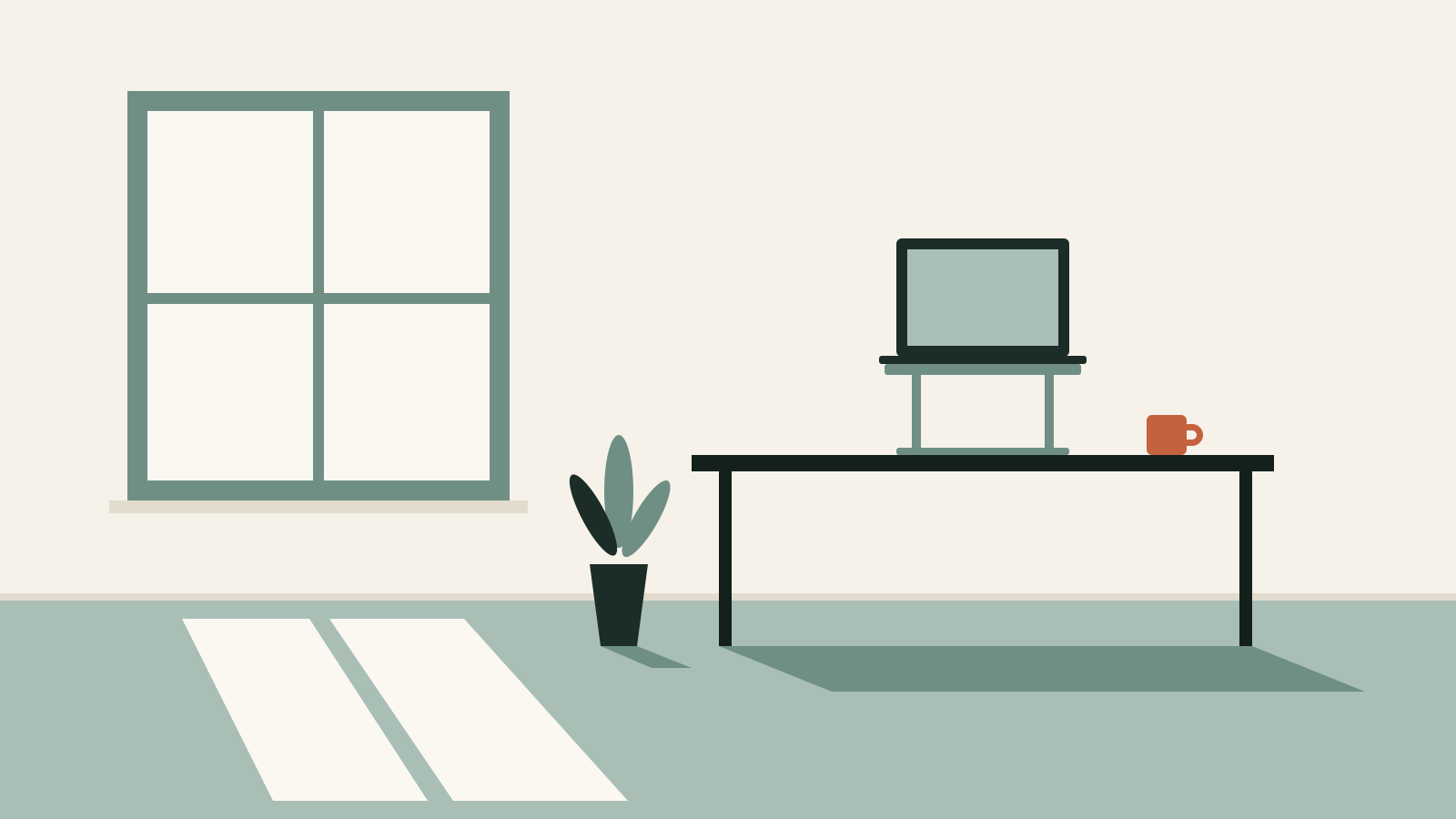
Neck pain from laptop work often shows up in the upper back too. Picture a laptop on a hotel desk, or on the dining table at home, and a long call. The chin drifts toward the screen, bit by bit. By late afternoon, when you finally stand up, the neck and the upper back are both stiff.
Mayo Clinic's symptom list matches that picture closely. Pain gets worse when you hold your head in one position for a long time, as when driving or working at a computer, and it comes with tight muscles, spasms, trouble moving the head and headaches. The same page notes that neck pain is more common after 40, and that stress can make the neck muscles tight and painful. People who sit still for more than six hours a day are more likely to have it, with a higher risk if that time is spent at a computer or phone.
The people I train often arrive with neck pain, stiffness and very tight muscles, and with a workload that already eats their sleep. That's an observation from my weeks, not a reading of your neck. Your cause still has to be checked properly.
Setup fixes for neck pain from laptop work
Both the NHS and Mayo Clinic come back to the same two ideas: line the body up so the head isn't hanging forward, and don't hold one position for long. In practice that means ears over shoulders, and shoulders over hips. Bring the phone up toward eye level instead of bending your neck down to it, and set the monitor at eye level as well. When you sit, the knees should be slightly lower than the hips, with the armrests taking the weight of the arms.
The night matters too. The NHS suggests a low, firm pillow, and says not to sleep on your front or twist the neck while you're in bed. Heat or cold is also on its self-care list, and the page explains how to use them. Which medicine to take, if any, is for a pharmacist or a doctor to decide. I don't prescribe.
Two more things from the NHS are worth knowing before you reach for a fix. Don't wear a neck collar unless a doctor tells you to, because the neck should keep moving. And if you can't move it safely, don't drive or cycle in that state.
What to do in the gap between calls
Use the gap you actually have, even if it's only a few minutes. When a call ends, stand up before you open the next tab. If you work at a computer all day or you've been travelling, Mayo Clinic's advice is to get up often and move and stretch the neck and shoulders. Bring the screen to eye level, even if that means a stack of books under a hotel laptop.
Then give the neck a minute. Let the ears sit over the shoulders, roll the shoulders back gently and bring the neck back, which is the NHS cue for sitting upright. If that movement hurts, stop. The aim is only to leave the position you were stuck in.
What I won't do is hand you a list of chin tucks from a video and call it your plan. Upper-back work, if it belongs at all, comes after an assessment: what hurts, what a doctor has already said, your medicines, how you move and how many days you can train. Every exercise needs a reason.
On a high-stress week the stiffness often reaches the lower back as well. Loading still waits on the order I explain in mobility before heavy lifting, and how a first session runs is on how I coach.
If the neck is part of why you want coaching
I train people one to one at their homes in Gurugram. If a doctor has said training is reasonable, or the warning signs above are absent, book an assessment. Ek baar assessment zaroor lo: take the assessment once. Even if you don't continue, you should leave knowing what to change, and what to leave to the doctor.
Sources
NHS, "Neck pain", https://www.nhs.uk/symptoms/neck-pain-and-stiff-neck/
Mayo Clinic, "Neck pain", https://www.mayoclinic.org/diseases-conditions/neck-pain/symptoms-causes/syc-20375581
FAQ
Should I wear a neck collar at my desk until the stiffness passes?
The NHS says not to wear a neck collar unless a doctor has told you to, because it is better to keep the neck moving. If you cannot move the neck safely, it also says not to drive or cycle.
The pain only shows up on long call days. Do I still need a doctor?
Pain that gets worse when the head stays in one position is exactly what Mayo Clinic describes. The NHS says to see a GP if you are worried, if it has not settled after a few weeks, or if painkillers have not helped. Go sooner if it is intense, spreads, or comes with numbness, weakness, tingling, or a headache, which is Mayo Clinic's line.
Will upper-back strength work fix neck pain from sitting?
I cannot promise that. Strength work comes after an assessment, with a reason you can repeat, and if a doctor already follows the neck, I train with that guidance. The exercises do not replace it.
What if the ache runs into my arm or the arm feels cold?
Stop treating it as ordinary stiffness. The NHS says pins and needles or a cold arm can be something more serious and to see a GP, and Mayo Clinic says to contact a healthcare professional if neck pain spreads into the arms or legs or comes with numbness, weakness, or tingling.
Related posts
Mobility before heavy lifting on a desk-job week
Mobility before heavy lifting is the order I use for a stiff desk week. Imbalance first, about 10 minutes of prep, then load, with a reason for each move.
Winded climbing stairs after 35, and what I check first
Winded climbing stairs after 35 can be the cost of a hard flight of steps, or a reason to see a doctor before you train. Here is how I sort that.